What is ImageInverter
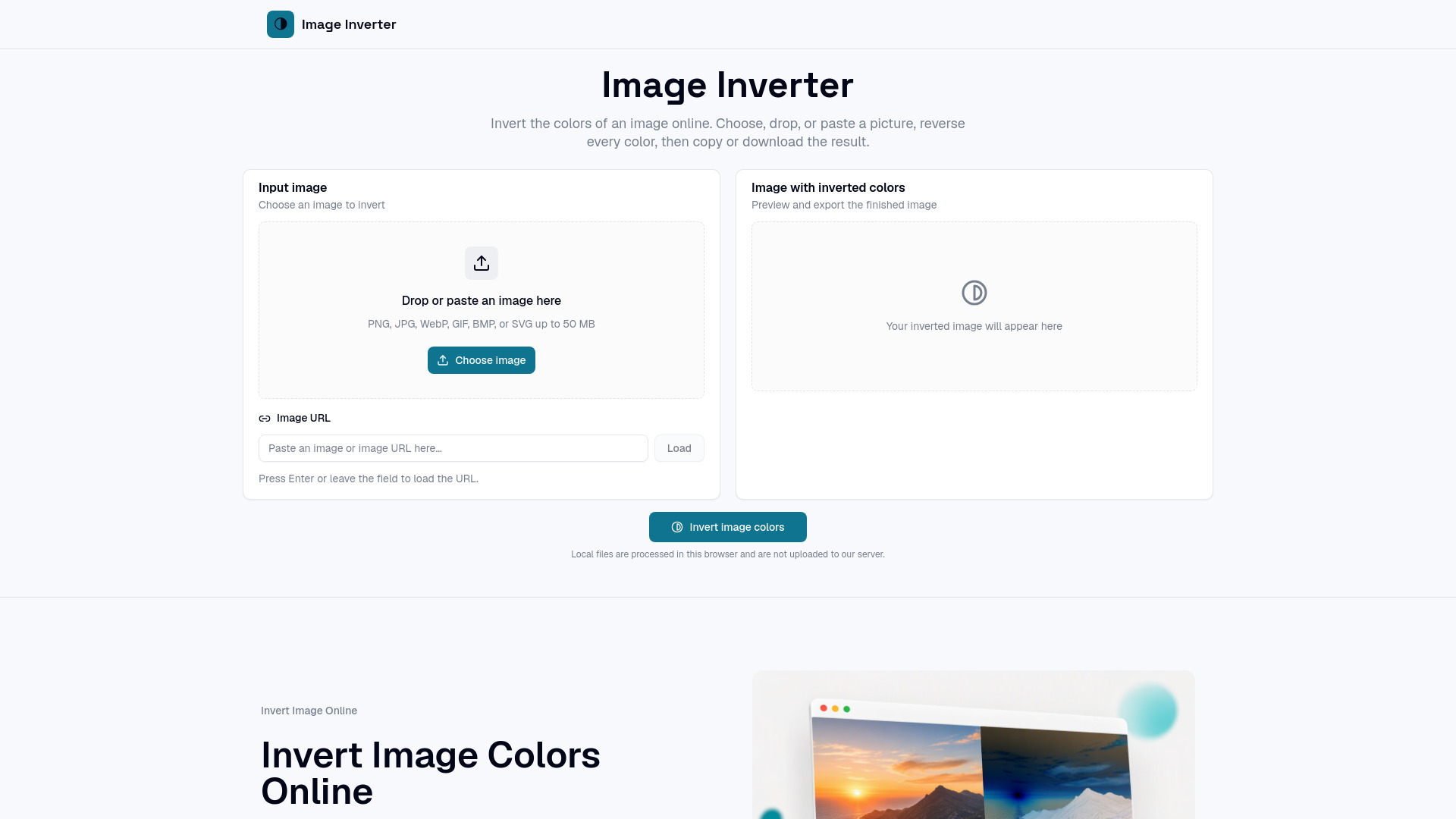
ImageInverter is an online tool that inverts the colors of an image, turning every color into its opposite while preserving the original dimensions and transparency. It operates entirely in the browser, allowing users to upload, paste, or load an image by URL, then preview and download the negative image in formats like PNG, JPG, BMP, or WebP.
How to use ImageInverter
- Choose an Image: Select a photo from your device, drag it into the upload area, paste an image from the clipboard, or enter an image URL. The input preview lets you zoom, fit, inspect at actual size, and pan before processing.
- Invert Image Colors: Press the invert button once. ImageInverter changes each RGB channel with a precise 255 minus channel calculation, so black becomes white, white becomes black, red becomes cyan, and orange becomes blue.
- Save the Inverted Image: Review the result at any zoom level, copy the negative image to your clipboard, or download it in a format supported by your browser, including PNG, JPG, BMP, and WebP.
Features of ImageInverter
- Local Processing: Local files are processed in the browser and are not uploaded to the server.
- Multiple Input Methods: Choose, drag, paste, or load an image URL.
- Preview Controls: Zoom, fit, actual size, and pan controls for both input and output.
- Export Options: Download as PNG, JPG, BMP, or WebP when supported.
- Clipboard Copy: Copy the inverted image to the clipboard.
- Transparency Preservation: Alpha values are not modified, so transparent areas remain transparent in PNG or WebP results.
- No Account Required: Use the tool without creating an account.
Use Cases of ImageInverter
- Designers: Test an opposite-color direction, inspect contrast, or create an alternate graphic before moving the result into a larger design project.
- Photographers: Invert photo colors to explore a film-negative look, compare tonal relationships, or build a striking draft for a portrait, landscape, product image, or editorial composition.
- Teachers and Students: Demonstrate positive and negative colors with the same source image. The clear before-and-after workflow helps explain RGB values, complementary colors, and digital image processing.
- Content Creators: Create inverted pictures for thumbnails, posts, short-form graphics, and visual transitions. ImageInverter exports a ready-to-use file without adding a watermark or changing the canvas size.
FAQ
How do I invert an image? Choose, drop, or paste the image in the tool above, then select Invert Image Colors. ImageInverter creates the opposite color for every visible pixel and displays the result beside the original.
How do I invert colors on a picture? Load the picture and press the invert button. The operation reverses the RGB channels: a channel value of 20 becomes 235, while the alpha channel stays unchanged so transparent areas remain transparent.
Can I invert a photo online without uploading it? Yes. A photo chosen from your device is decoded and processed locally in the browser. ImageInverter does not send that local file to this site's server, and the result remains on your device unless you decide to download or copy it.
Can I paste an image or image URL? Yes. Paste image data from the clipboard while the tool is focused, or paste an HTTP or HTTPS image URL into the URL field. Remote images must be downloadable before the browser can process their pixels.
What file types does ImageInverter support? The input accepts image formats your browser can decode, commonly PNG, JPEG, WebP, GIF, BMP, and SVG. Available output buttons are detected in your browser and normally include PNG, JPG, and WebP, with BMP shown when supported.
Does color inversion remove transparency? No. ImageInverter changes red, green, and blue values but does not modify alpha values. A transparent PNG keeps its transparent regions in the PNG or WebP result. JPG cannot store transparency.
Is an inverted image the same as grayscale? No. Grayscale removes hue and represents brightness with neutral tones. An inverted image keeps color relationships but replaces every channel with its opposite value, producing cyan from red, magenta from green, and yellow from blue.
Can I reverse the result? Yes. Download the inverted image, load it into ImageInverter, and run the same operation again. Applying exact color inversion twice returns the original RGB values, although saving to a lossy JPG can introduce small compression differences.