What is Protex AI
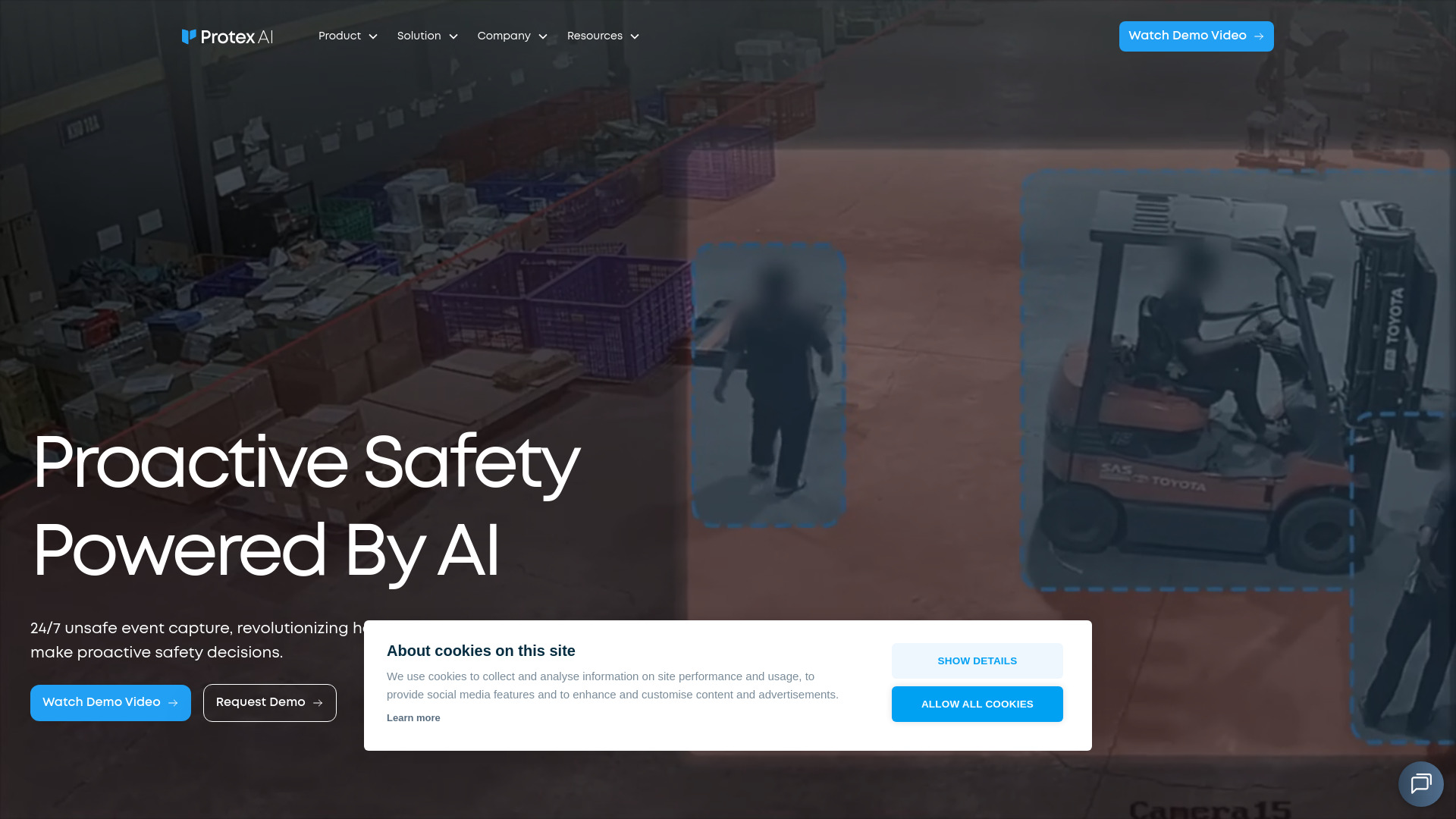
Protex AI is a proactive safety platform that uses AI video analytics on existing CCTV to detect unsafe events and behaviours in real time.
How to use Protex AI
- Connect: Seamless plug-and-play vision processing box connects to your existing CCTV infrastructure and securely processes data on-site with any modern system.
- Configure: Leverage your in-house EHS expertise to tailor custom safety rules and dashboards perfectly aligning with your facility’s unique requirements.
- Assess: Instantly unlock insights into unsafe behaviors with our Gen-Al tool Copilot and intuitive reporting capabilities, empowering proactive decision-making.
- Action: Our actions feature streamlines creating and completing corrective measures, removing guesswork and delivering clear, tangible results.
Features of Protex AI
- AI video analytics on existing CCTV
- Real-time detection of unsafe events and behaviors
- 24/7 unsafe event capture
- Proactive safety decisions
- Seamless plug-and-play vision processing box
- On-site data processing
- Custom safety rules and dashboards
- Gen-AI tool Copilot for insights
- Intuitive reporting capabilities
- Actions feature for corrective measures
- Integrations with EHS Management Systems
- Integrations with BI tools
- CCTV Integration
Use Cases of Protex AI
- Logistics & Supply-Chain: Improve risk visibility across logistic and supply chain environments.
- Retail & Wholesale: Enhance safety & operational awareness across retail & warehouse operations.
- Industrial Manufacturing: Boost safety insights across your logistics and manufacturing facilities.
- Food & Beverage Manufacturing: Enhance safety awareness across your food & beverage environments.
- Warehousing: Improve risk visibility throughout your warehouse environments.
FAQ
How can AI help identify hazards and prevent them? AI-powered predictive analytics can detect patterns of risk over time by collecting data from various sources such as CCTV, wearables, or IoT devices. AI technology can also be used for real-time risk assessment in hazardous environments. This technology uses computer vision and machine learning algorithms to analyze video streams from cameras installed in hazardous areas and detect any potential risks or unsafe behaviors that could lead to injury or illness. Another way AI helps with hazard prevention is through automated compliance monitoring. By using AI-powered systems such as natural language processing (NLP), organizations can automate the process of monitoring regulatory standards and requirements related to safety policies and procedures.
How to identify hazards in the workplace? The first step in identifying workplace hazards is to conduct regular inspections of the area. This should include physical inspections as well as reviewing any relevant safety data, such as accident reports and near-miss incidents. This involves examining any potential exposure employees may have to hazardous materials or environments and taking steps to reduce that exposure. An assessment of potential psychological issues that employees may face must also be included. AI powered computer vision solutions integrate with CCTV infrastructures to help identify hazards autonomously across various working environments.
How to prevent false positives in near miss reporting? The first step in preventing false positives is clearly defining what constitutes a near miss. Your organization should have a working definition of the term and specific criteria for what qualifies as a near miss incident. In order for reporting systems to work properly and avoid false positives, employees need training on how to report an incident correctly. Another way to reduce false positives is by regularly reviewing errors in your reports. This means looking out for duplicates or inaccurately categorized incidents in your reports, identifying trends or patterns in reported errors, and taking corrective action where needed.
How to prevent workplace accidents and injuries? The first step in preventing workplace accidents and injuries is establishing a clear safety policy. This policy should outline specific expectations related to safety, including how employees should behave while on the job. The next step is to identify potential risks in the workplace and to take appropriate steps to mitigate or control these risks. Employees must also receive adequate training for prevent any workplace accidents, thus reducing the likelihood of injuries.
How to prevent electrical accidents in the workplace? One of the most important aspects of preventing electrical accidents is ensuring that all employees are educated on the potential dangers of electricity. It’s also important for employers to ensure that all electrical equipment is properly maintained and inspected on a regular basis. Employees should also be trained on proper use of any electrically-powered equipment they may encounter in their work environment. They should be aware of any safety features built into the machine such as ground fault circuit interrupters (GFCIs) which can help prevent electrocution in case something goes wrong.
What are the tools used to identify hazards in the workplace? Here are some common tools that can be used to identify hazards in the workplace: Risk assessment matrix: This tool helps EHS teams identify hazards and prioritize them based on their severity and likelihood of occurrence. The matrix has two axes—one for identifying the severity of an accident, and the other for the likelihood of it happening. Job Safety Analysis: This method works by breaking down a job into its individual components and analyzing each step of the process for any potential risks or dangers that may exist. Checklists: EHS teams can also use a checklist to identify any major hazards. The checklist generally includes a series of points or questions that a supervisor or person in charge must go through.
What percentage of workplace accidents are preventable? According to numerous research studies, up to 99% of accidents can be prevented. In 2021, the National Safety Council reported 4,472 preventable injury-related deaths.