

Brigade
AI Assistant
Open-source AI teammates automate business tasks across your connected apps.
Check pricingVisit site

AI Customer Service
AI customer support platform connecting customer feedback to product workflows
Explore other tools in related categories.
AI Assistant
Open-source AI teammates automate business tasks across your connected apps.

AI Marketing
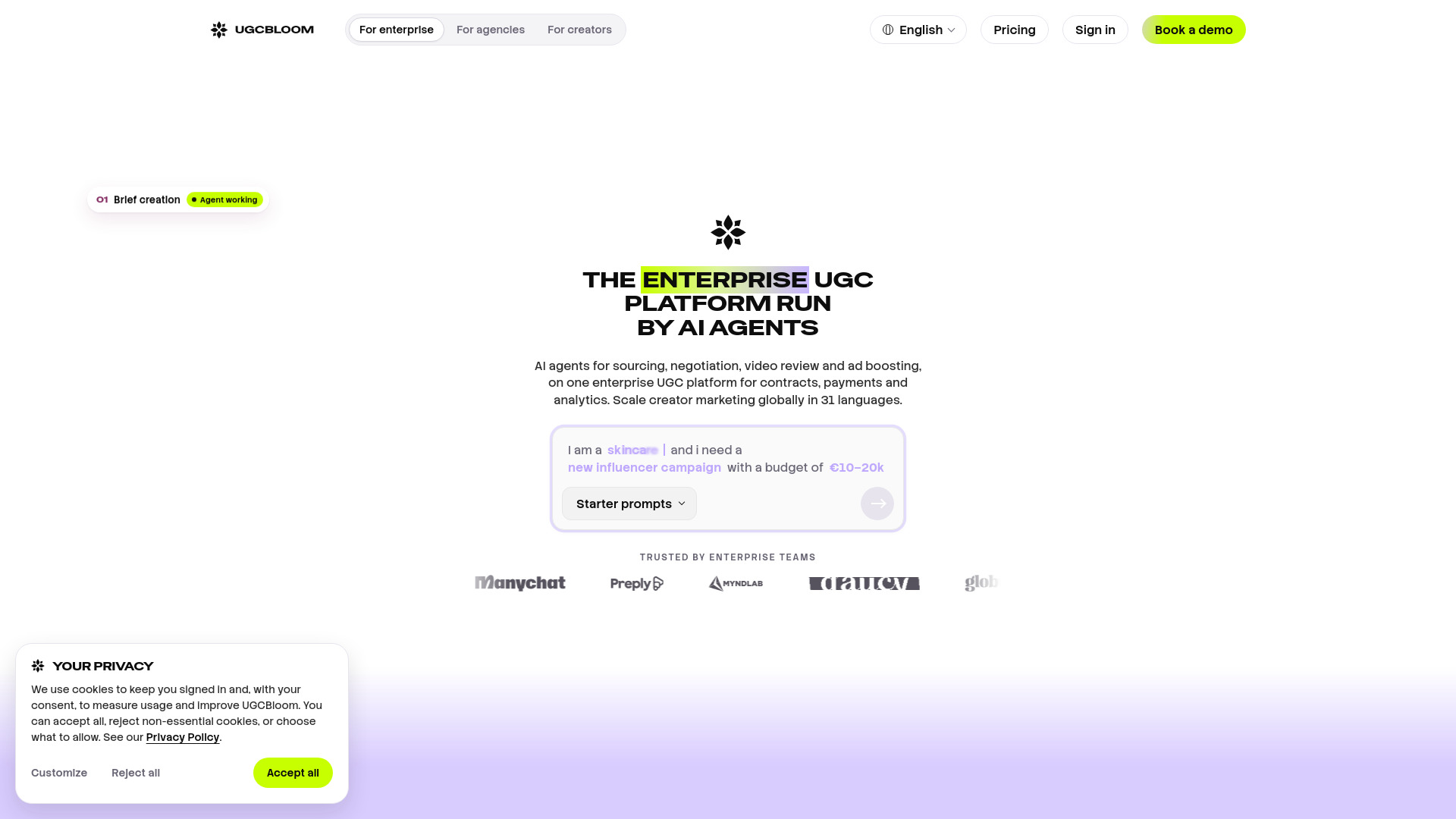
AI platform for sourcing and managing global creator campaigns


AI Calendar
A local Mac AI assistant for email, calendars, notes, dictation, and errands.
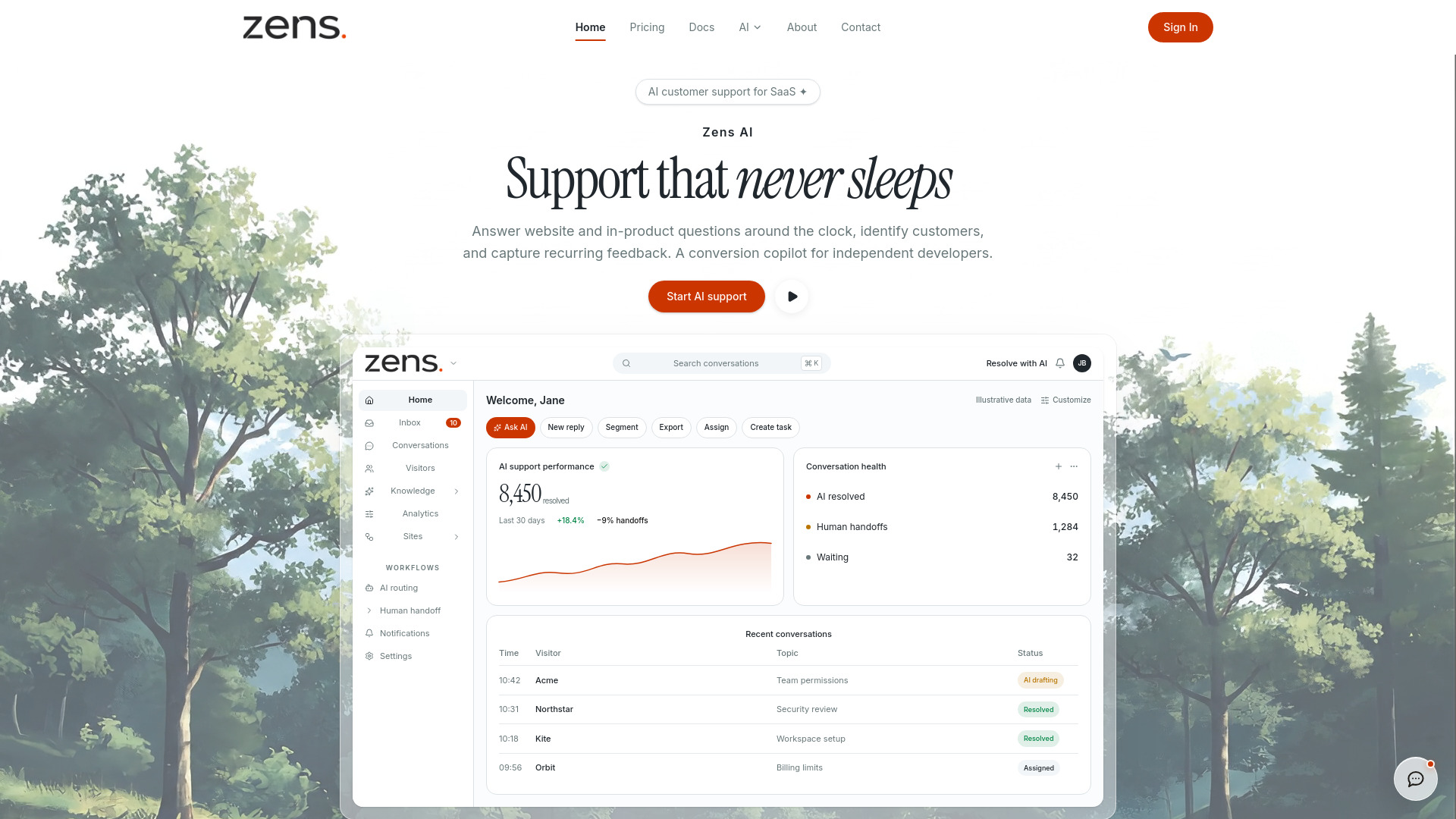
Zens AI is an AI customer support system designed for SaaS teams. It connects customer feedback to product workflows, turning user conversations into actionable insights for tools like Codex, Slack, Linear, and GitHub. It provides a trusted context layer that includes user identity, account state, current page, product events, and conversation history, enabling support teams to resolve issues faster and product teams to iterate based on real customer evidence.
How is Zens AI different from a regular live chat tool? Zens AI brings user identity, account state, current page, product events, and conversation history into one trusted context layer, so support replies, product feedback, and agent tasks all work from the same evidence.
Which teams is Zens AI built for? Zens AI is built for SaaS teams that want support conversations to drive product improvements, especially founders, support leads, product managers, growth teams, and engineering teams adopting agent workflows.
Will AI replies be sent to customers automatically? Review-first is the default. AI can draft replies, summaries, and recommendations, while your team controls what can be automated and what must be approved by a human.
Can Zens AI connect to Codex or other agent workflows? Yes. Zens AI can turn repeated feedback into Codex-ready briefs and send context to Slack, Linear, GitHub, Multica, or other team agents.
Will customer data be used for model training? Customer conversations are not used for model training by default. Zens AI emphasizes signed identity, role controls, private fields, and data minimization so agents only receive the context needed for the task.