What is Agent-Native
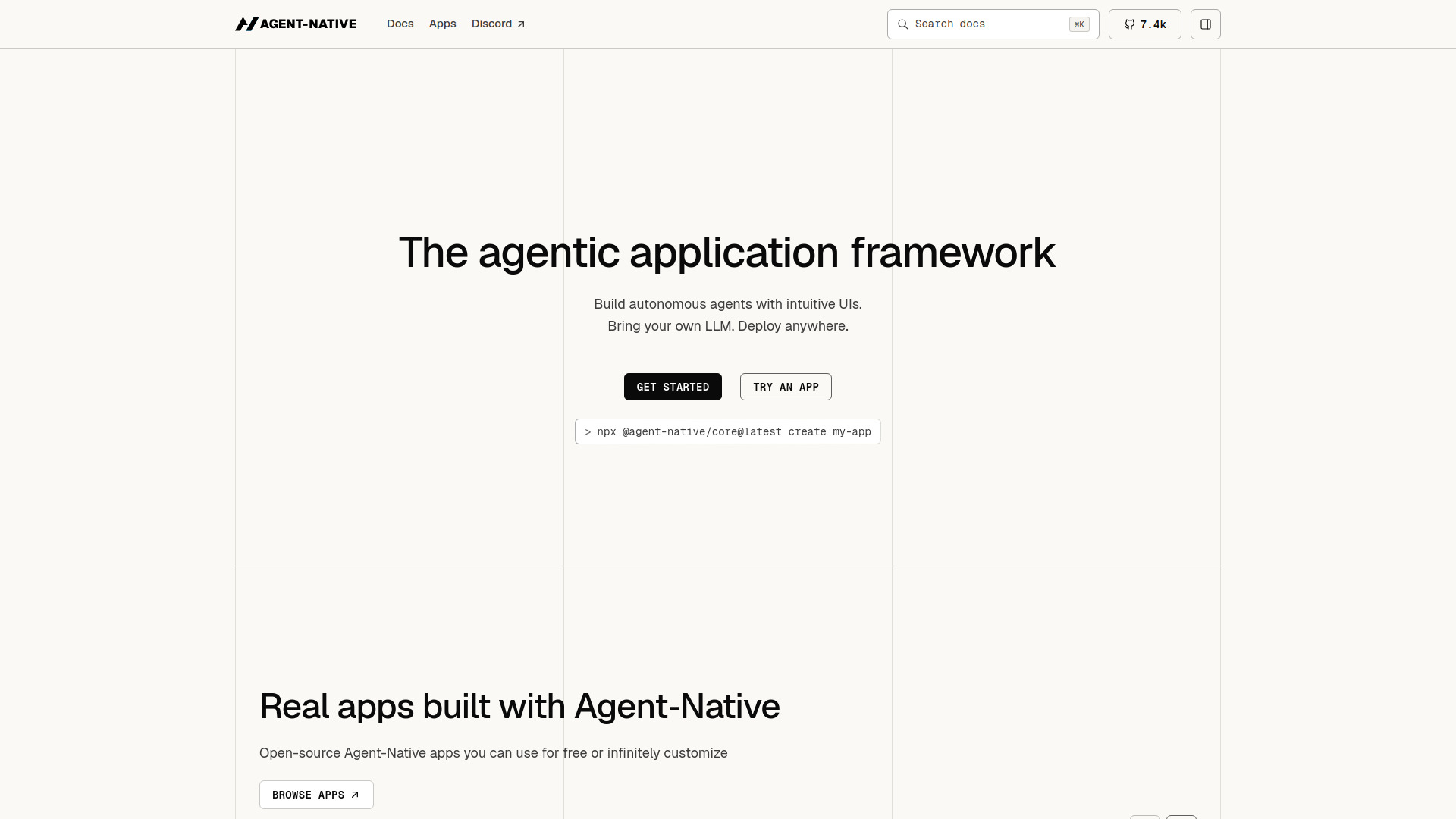
Agent-Native is an open-source TypeScript framework for building agentic applications where AI agents and the user interface share the same database and application state. It enables developers to create autonomous agents with intuitive UIs, bring their own LLM, and deploy anywhere. The framework is developed by Builder.io and is available under the MIT license.
How to use Agent-Native
- Install the framework: Run
npx @agent-native/core@latest create my-app to scaffold a new project.
- Define capabilities: Use
defineAction() to define a capability once. This single definition powers the agent, React UI, HTTP clients, and integrations.
- Build the UI: Leverage the built-in React components to create screens for browsing, editing, and reviewing work.
- Integrate agent chat: Embed agent chat so users can delegate work, ask questions, and review results in the same UI.
- Connect data: Use the shared PostgreSQL database so users and agents read and update the same source of truth.
- Add skills and memory: Provide agents with reusable expertise and persistent context.
- Set up automations: Configure agent work to run automatically on schedules or events.
- Deploy: Deploy the application anywhere.
Features of Agent-Native
- One Action powers every surface: Define a capability once with
defineAction(); it works across the agent, React UI, HTTP clients, and integrations.
- React UI: Pre-built screens for browsing, editing, and reviewing work.
- Embedded agent chat: Users can delegate work, ask questions, and review results within the same UI.
- Shared application state: The agent knows what users are viewing, selecting, and editing.
- Shared PostgreSQL data: Users and agents read and update the same source of truth.
- Skills and memory: Give agents reusable expertise and persistent context.
- Automations: Run agent work automatically on schedules or events.
- Agent teams: Delegate work to specialist agents in the same workspace or across connected agents.
- Authentication and organizations: Built-in sign-in, user accounts, and organization membership.
- Sharing and permissions: Control who can view, comment, edit, or manage every resource.
- Bring your own LLM: Integrate any LLM provider.
- Deploy anywhere: Flexible deployment options.
Use Cases of Agent-Native
Agent-Native can be used to build a variety of agentic applications, such as:
- Design: Turns prompts into interactive designs that follow your design system and improve with agent feedback.
- Slides: Creates on-brand presentations from prompts or existing slides, which an agent can build, edit, and refine.
- Analytics: Connects your data so an agent can answer questions in plain language and turn results into charts and dashboards.
- Calendar: Brings your Google Calendars together so an agent can find time, schedule or move events, and manage bookings.
- Clips: Records your screen, meetings, and voice notes so agents can understand what happened and take action.
- Mail: A keyboard-first inbox where an agent prioritizes mail, drafts replies, summarizes threads, and follows up.
- Assets: Gives agents shared brand guidelines, images and videos to create and choose on-brand media across apps.
- Content: Lets an agent work in your documents to draft in your voice, create interactive content, and publish to your site.
Pricing
Agent-Native is open-source and free to use under the MIT license. There is no cost to use the framework.
FAQ
Is Agent-Native open-source?
Yes, Agent-Native is open-source and available under the MIT license.
Can I use my own LLM?
Yes, you can bring your own LLM.
Where can I deploy Agent-Native applications?
You can deploy anywhere.
What programming language is used?
Agent-Native is built with TypeScript.
Does it include authentication?
Yes, authentication and organization management are built in.
Can agents and users share data?
Yes, agents and users share the same PostgreSQL database and application state.