What is Gradium
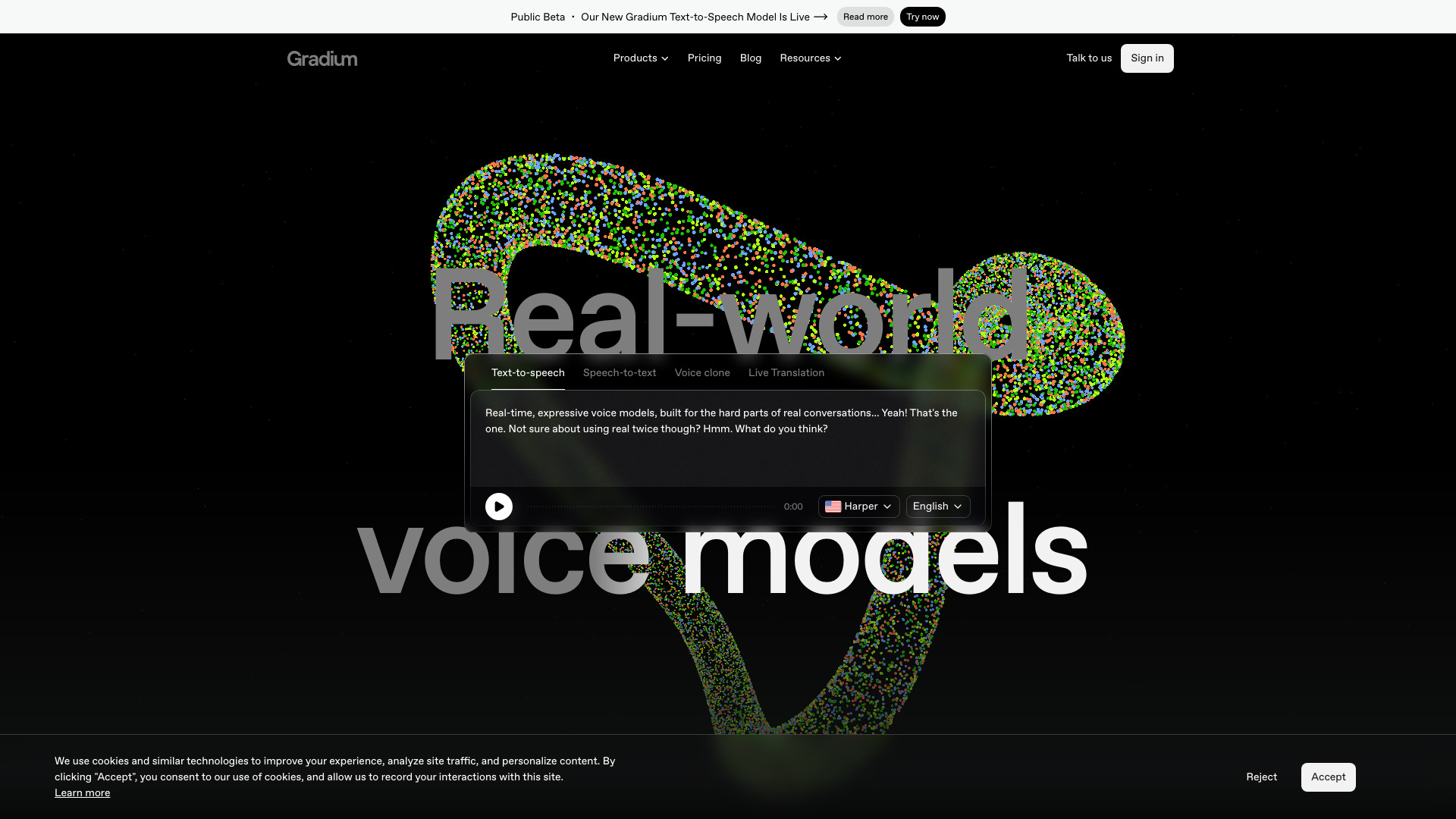
Gradium is a voice AI platform that provides ultra-low-latency APIs for text-to-speech, speech-to-text, and voice cloning. It enables developers to generate expressive speech, accurate transcriptions, and high-fidelity voice clones through a single API. The platform is designed for building voice agents and real-time voice applications, with a focus on natural, expressive, and robust performance across multiple languages.
How to use Gradium
- Sign in to the Gradium platform using your account.
- Choose a model from the available options: Text-to-Speech, Speech-to-Text, Live Translation, or Voice Cloning.
- Integrate the API into your application by following the documentation provided.
- Test the models using the demos available on the website or through the API.
- Deploy your voice application with the API, leveraging Gradium's low latency and multilingual support.
Features of Gradium
- Text-to-Speech: Turn text into natural-sounding voice with expressive output.
- Speech-to-Text: Transcribe audio into text instantly with high accuracy.
- Live Translation: Convert voice to voice in real time, enabling multilingual communication.
- Voice Cloning: Create instant or professional voice clones with high fidelity.
- On-Device TTS: Offline real-time natural voice generation for on-device applications.
- Ultra-low latency: Optimized for real-time voice interactions.
- Multilingual support: Robust across every language, with support for English, French, Spanish, Portuguese, and German.
- Single API: Access all voice AI models through one unified API.
- Gradbot: Build voice agents in a single prompt.
- Agent Demo: Test voice agents live.
Use Cases of Gradium
- Voice Agents: Build real-time voice agents for customer support, virtual assistants, and more.
- Synthetic Callers: Create realistic synthetic voices for evaluation agents and testing.
- Multilingual Communication: Enable real-time multilingual communication with live translation.
- Enterprise Voice Solutions: Deploy voice agents in enterprise environments with reliable performance.
- Content Creation: Generate natural-sounding voiceovers for videos, podcasts, and other media.
- Accessibility: Provide speech-to-text and text-to-speech capabilities for accessibility applications.
Pricing
Gradium offers a pricing structure with credits. During the public beta, users who provide feedback receive 1 million Gradium credits. Specific pricing plans are available on the Pricing page.
FAQ
What is the public beta? Gradium has released a new Text-to-Speech model in public beta. It handles complex cases natively, such as phone numbers, email addresses, IBAN numbers, and time expressions, without requiring pre-processing or text normalization.
How can I test the new TTS model? Anyone can test it through the API. Users who send feedback during the beta receive 1 million Gradium credits.
What languages are supported? Gradium supports English, French, Spanish, Portuguese, and German, with robust performance across every language.
Is there an on-device option? Yes, Gradium offers On-Device TTS for offline real-time natural voice generation.
How do I get started? Sign in to the Gradium platform, choose a model, and integrate the API using the documentation. You can also try the demos and the Agent Demo to see the capabilities.