What is Timbal AI
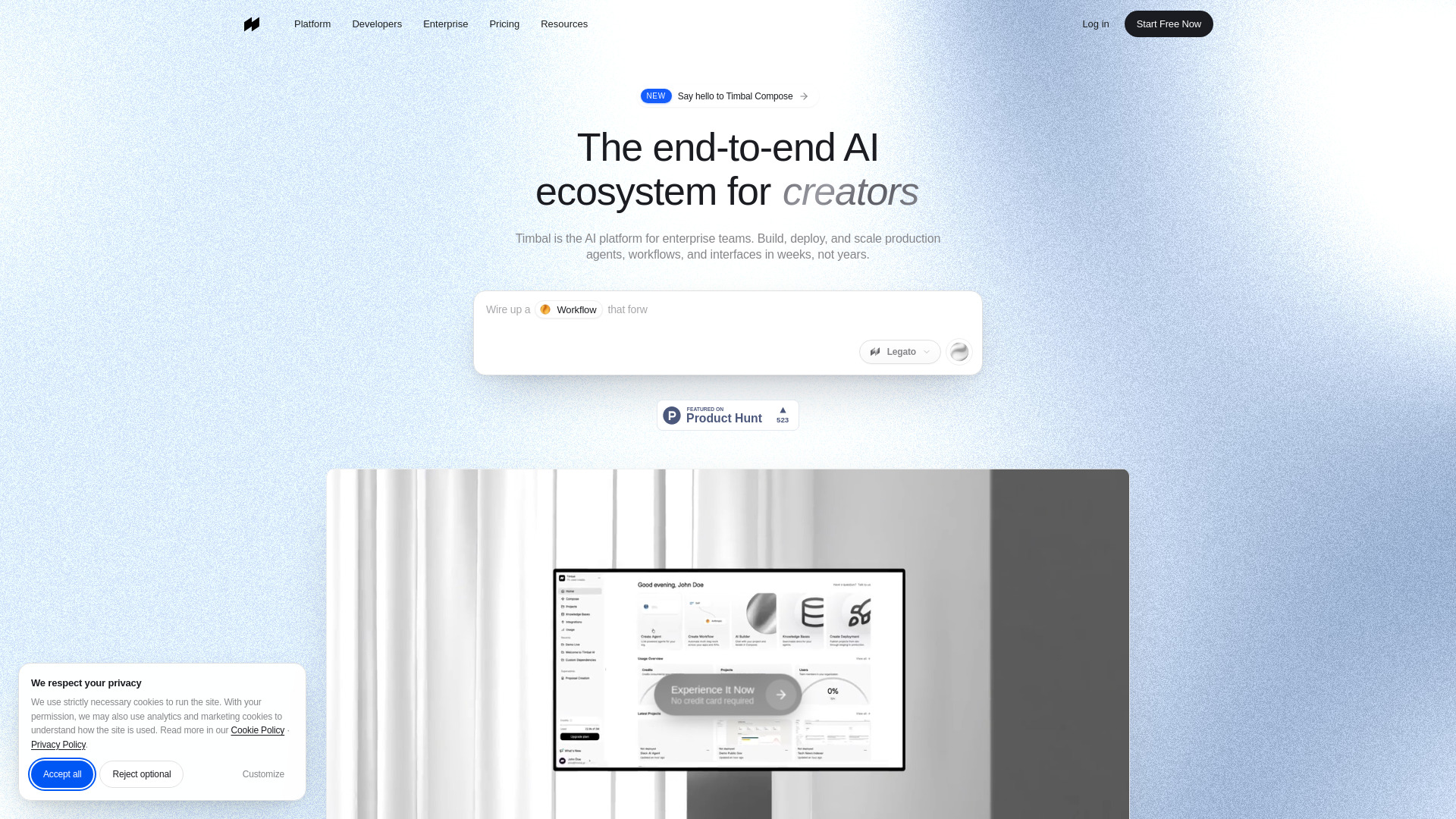
Timbal is an end-to-end AI platform for enterprise teams to build, deploy, and govern agents, workflows, and knowledge bases. It provides a full production stack including a typed Python framework, a visual Studio, a runtime for orchestrating agents and workflows, governance and evals, and integrations with existing systems.
How to use Timbal AI
- Build: Define agents, workflows, and knowledge bases using code (Python framework) or visually in the Studio.
- Deploy: Run on the model and provider of your choice (OpenAI, Anthropic, Google, Mistral, Meta, or self-hosted). Ship to chat, email, voice, or your product UI from a single runtime.
- Govern: Use role-based access controls, run-level observability, and evals to gate promotions to production.
Features of Timbal AI
- Agents: Autonomous AI with reasoning, tools, and memory, production-ready.
- Workflows: Deterministic AI pipelines with chained steps and branching logic.
- Interfaces: Custom interfaces for every AI you ship, from chat to dashboards to voice.
- Knowledge Bases: Enterprise-grade RAG built on a hybrid DB engine with sync, chunk, and retrieve.
- Integrations: 100+ native connectors including SAP, Salesforce, Slack, Teams, Drive, Jira, and more.
- Model Agnostic: Use any model provider per agent, step, or tenant with first-class provider fallbacks.
- Enterprise Deployments: Sovereign hosting (cloud or on-premise), customer-owned model API keys, RBAC, and full auditability.
- Developer Tools: Framework, SDK, CLI, and API for building and managing AI applications.
Use Cases of Timbal AI
- Customer Support Agents: Build autonomous agents that handle inquiries using company knowledge bases.
- Automated Workflows: Create deterministic pipelines that integrate with SAP, Salesforce, and other enterprise systems.
- Data Analysis Interfaces: Deploy custom dashboards and chat interfaces for internal teams.
- Voice Agents: (Coming soon) Real-time voice AI for calls and conversations.
Pricing
- Free: For individuals.
- Team: From €25 per month per seat.
- Enterprise: Custom pricing for sovereign hosting, SLAs, or volume usage. Same features across all plans; you pay for usage and seats, not feature access.
FAQ
What is Timbal? Timbal is the production AI platform enterprise teams use to build, deploy, and govern agents, workflows, and knowledge bases. Define behavior in code or in Studio, run on the model and provider of your choice, and ship to chat, email, voice, and your product UI from a single runtime.
How is Timbal different from LangChain, Make, or Zapier? LangChain is a framework. Make and Zapier are no-code automation tools. Timbal is the full production stack: a typed Python framework, a Studio for building visually, a runtime that orchestrates agents and workflows, governance and evals for enterprise rollout, and integrations with the systems your team already uses.
Does Timbal support enterprise deployments? Yes. Timbal supports sovereign hosting (cloud or on-premise), customer-owned model API keys, role-based access controls, and full run-level observability. Every agent run, tool call, and model invocation is auditable, replayable, and gated through evals before promotion to production.
Is Timbal model agnostic? Yes. Timbal is model-agnostic. Use OpenAI, Anthropic, Google, Mistral, Meta, or self-hosted models — switch providers per agent, per step, or per tenant. Provider fallbacks are first-class so a single failure does not take down a workflow.
Where does Timbal host data? Customer data stays in the region you choose. Timbal Cloud runs in the EU by default; on-prem and private-cloud deployments keep all data inside your perimeter. They never train on customer data and sign Data Processing Agreements aligned to GDPR.
How does pricing work? Free for individuals, paid plans from €25 per month per seat for teams, and custom pricing for enterprise rollouts that need sovereign hosting, SLAs, or volume usage. Same agents, workflows, and knowledge bases on every plan — you pay for usage and seats, not for the right to use a feature.